



Importance of Shale Shaker Screens in Drilling Solids Control Systems
Engineering Guide: Maximizing Mud Recovery, API RP 13C Cut-Point Selection & Drilling Cost Reduction
In oilfield drilling operations, if drilling mud is considered the lifeblood of the well, the shale shaker serves as the kidney.
Within the solids control circulating system, the shale shaker screen acts as the first and most critical mechanical separation barrier. As drilling mud returns from the wellbore carrying high concentrations of abrasive rock cuttings, solids control efficiency determines whether the drilling fluid maintains its required rheological properties or degrades under fine-particle buildup.
Selecting the correct screen mesh size and configuration directly dictates mud recovery volume, protects expensive downstream equipment, and drives down total drilling operating costs (OPEX).
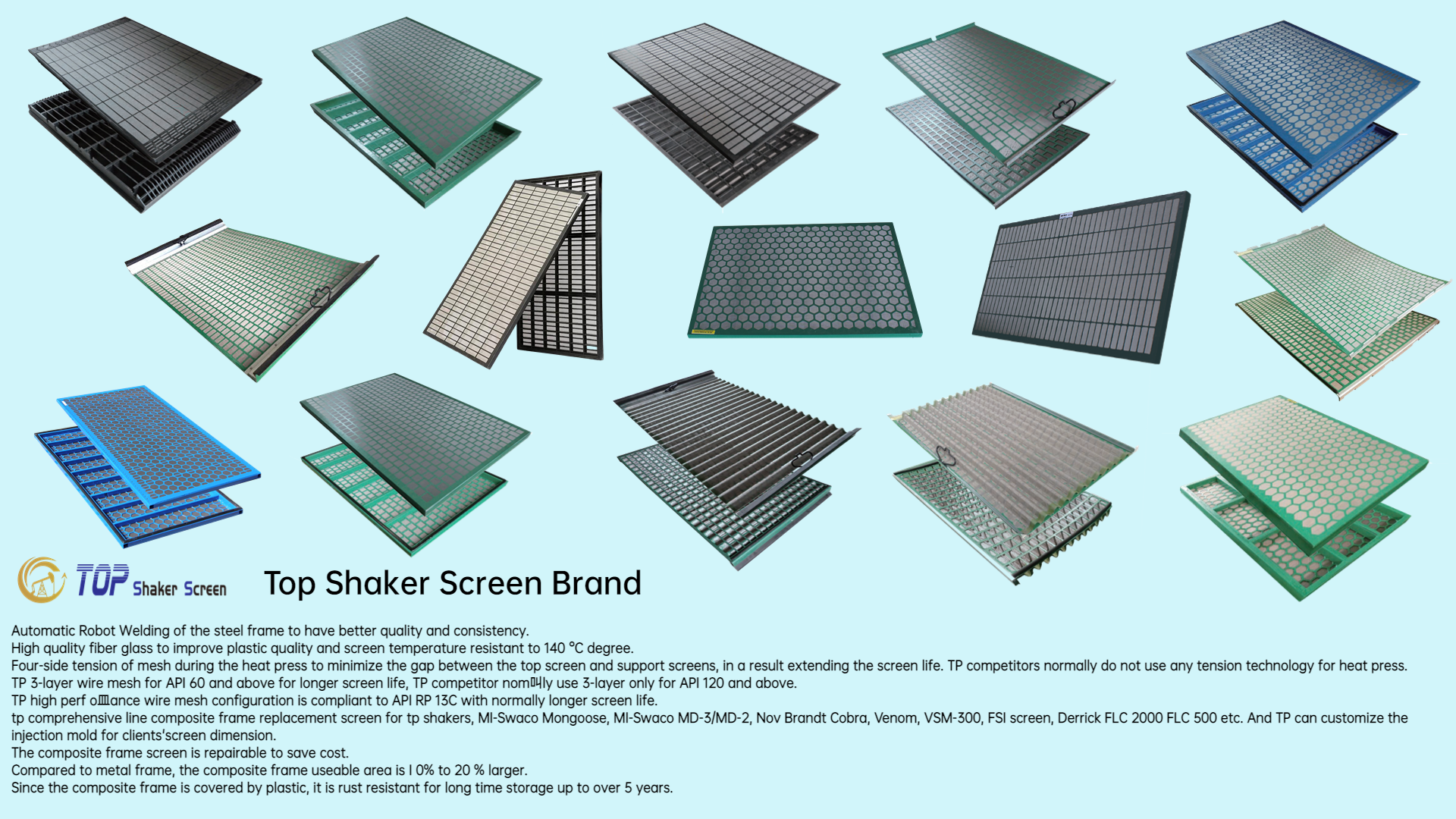
How Screen Quality Dictates Shaker Performance
The operational performance of a shale shaker is heavily governed by two core physical parameters:
- API Mesh Designation & D100 Cut Point: The mesh size establishes the maximum diameter of solids permitted to pass through the screen. Higher API number screens (fine mesh) capture microscopic drilled solids, preventing them from recirculating downhole.
- Non-Blanked Area Percentage: The net usable screening surface area (open area free of bonding material or structural rib blockage) directly governs fluid conductance. Higher non-blanked area enables shakers to handle elevated mud pump rates without surface blinding or fluid bypass over the discharge end.
Multi-Stage Filtration & API Mesh Selection Matrix
A standardized solids control mud system utilizes multi-level screening arrays across sequential shaker decks or compartments to achieve balanced separation:
| Filtration Tier | Typical API Number | D100 Separation Range | Target Solids & Formations | Key Operational Benefit |
|---|---|---|---|---|
| 1. Scalping / Top Deck | API 20 – API 60 | > 250 μm (Coarse) | Fast top-hole drilling, gumbo clay, gravel | Prevents primary deck tearing and shock loading |
| 2. Primary Separation | API 80 – API 170 | 90 μm – 180 μm (Medium) | Sandstone, limestone, intermediate drilling | Balances high fluid throughput and solids dryness |
| 3. Fine Finishing | API 200 – API 325+ | < 75 μm (Fine / Ultra-Fine) | Abrasive silt, weighted OBM/SBM systems | Minimizes desilter and centrifuge solid loading |
Economic Impact: Reducing Total Drilling Costs (TCO)
Investing in high-durability, precision-manufactured shaker screens delivers quantifiable returns across four key operational areas:
- Reduced Mud Loss & Chemical Dilution: Dry cuttings discharge eliminates excessive retention of expensive synthetic-based (SBM) or oil-based muds (OBM), lowering whole-mud dilution volumes.
- Extended Downstream Component Lifespan: Removing coarse solids at the shaker eliminates erosive wear on desander cones, desilter manifolds, mud pump liners, and high-speed decanter centrifuge bowls.
- Minimizing Rig Non-Productive Time (NPT): Premium stainless steel wire cloth (SS304/SS316L) combined with composite or polyurethane backing resists mesh fatigue and premature blowout under high G-forces.
- Enhanced Rate of Penetration (ROP): Clean, low-solid drilling fluids reduce bottom-hole hydrostatic overbalance and optimize bit hydraulic energy.
Frequently Asked Questions (FAQ)
Q: Why is the shale shaker considered the primary line of defense in solids control?
A: Shale shakers remove over 70% to 80% of drilled solids generated downhole before the fluid reaches downstream hydrocyclones (desanders, desilters) and decanter centrifuges, protecting downstream equipment from excessive abrasive wear.
Q: What is the significance of the non-blanked area on a shaker screen?
A: The non-blanked screening area determines actual mud flow capacity. A higher usable open area increases fluid conductance, prevents liquid pool overflow at high pump rates, and maximizes mud recovery.
Q: How does API RP 13C compliance impact shaker screen selection?
A: API RP 13C compliance standardizes D100 separation cut points and fluid conductance testing, ensuring drilling contractors receive precise solids separation regardless of screen manufacturer design.
Looking for API RP 13C Certified Replacement Shaker Screens?
We manufacture premium flat, pyramid (3D), composite, and polyurethane shaker screens engineered to fit all major international shaker models (including Derrick, NOV Brandt, MI SWACO, and Kemtron formats).
- API Mesh Range: API 20 to API 325+
- Custom Composite Frame & Stainless Steel Wire Mesh (SS304/SS316L)
- Factory-Direct Pricing & Rapid Air/Sea Export Dispatch
Contact our solids control engineering specialists today to request cross-reference charts and bulk quotes!
Need Centrifuge Wear Parts or a Complete One-Stop Quotation?
Contact TSS-TUP engineering sales team today for technical consultation, competitive pricing, and fast global delivery.