



High-Performance Replacement for BAUER 205421 RSM-D 17×30 Round Shank Drilling Tooth
Aftermarket Round Shank Foundation Drilling Tooth for Rock and Mixed-Ground Applications
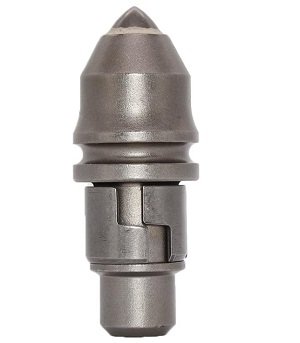
When a foundation drilling project is operating under tight production schedules, a worn drilling tooth can become much more than a small maintenance issue. Reduced penetration, excessive vibration, uneven tool wear and unexpected tooth replacement can quickly increase operating costs.
For contractors, drilling-tool distributors and maintenance departments, the challenge is often finding a replacement tooth that matches the existing holder geometry while maintaining reliable cutting performance.
Our Round Shank Foundation Drilling Tooth is designed as an aftermarket replacement solution for cross-reference applications corresponding to BAUER Item No. 205421 / RSM-D 17×30.
BAUER's current service documentation identifies 205421 as RSM-D 17×30, with the long description RSM-38-50-17×30-131-CL. The catalog identifies the tooth dimensions by shaft diameter, tungsten-carbide diameter, body diameter, tungsten length, total tooth length and fixing method.
Disclaimer: Non-OEM Replacement: Brand names, part numbers, and model designations (e.g., BAUER®, BAUER Item No. 205421, and RSM-D) are referenced solely for identification, dimensional comparison, and compatibility verification. This product is an aftermarket replacement component and is not manufactured, supplied, endorsed, or certified by BAUER Maschinen GmbH unless explicitly stated otherwise. Customers should verify dimensions, holder configuration, fixing method, and application requirements before ordering.
Why Replace the OEM Tooth?
Foundation drilling contractors often face three practical problems when sourcing wear parts:
- Equipment Downtime: A drilling rig generates significant idle costs when paused. Waiting for wear components interrupts the overall project schedule.
- High Replacement Cost: OEM wear parts carry substantial procurement markups, especially during multi-tooth simultaneous changeouts.
- Long or Uncertain Supply Cycles: International shipments add lead-time risks and inventory pressure.
An aftermarket replacement strategy allows contractors and distributors to maintain a controlled inventory of frequently replaced drilling teeth and reduce dependence on a single procurement channel.
BAUER 205421 Cross-Reference & Technical Specification
According to standard service documentation, Item 205421 corresponds to RSM-D 17×30, with the detailed designation: RSM-38-50-17×30-131-CL.
| Parameter | Reference Specification |
|---|---|
| Product Type | Round Shank Chisel / Foundation Drilling Tooth |
| Aftermarket Reference | BAUER 205421 |
| BAUER Description | RSM-D 17×30 |
| Long Description | RSM-38-50-17×30-131-CL |
| Shaft Diameter | 17 mm |
| Tungsten Carbide Diameter | 30 mm |
| Body / Collar Combination | 38–50 mm |
| Total Tooth Length | 131 mm |
| Fixing Method | CL – Long Clamping Sleeve |
| Cutting Element | YG11C / Virgin Tungsten Carbide Tip |
| Body Material | High-strength alloy steel (Forged 42CrMo standard; MTR available) |
| Application | Foundation drilling / rock drilling / rotary piling |
| Ground Condition | Medium to hard and abrasive formations, subject to tool design |
| Product Status | Premium aftermarket replacement (Non-OEM) |
*Note: The dimensions above reflect nominal reference values; final compatibility should always be verified against the actual holder and worn tooth dimensions before field operation.
Designed for Demanding Foundation Drilling
A round shank drilling tooth is a wear component exposed directly to repeated impact, rotation, abrasion and compressive loading. The cutting system must balance:
- Carbide cutting performance & fracture toughness
- Forged alloy steel body shock absorption
- Clamping sleeve retention reliability
- Dimensional consistency for free holder rotation
- Resistance to abrasive matrix washout
The RSM-D 17×30 configuration uses a round-shank design with a carbide cutting element and a long clamping-sleeve fixing arrangement (CL). Note the distinction from HF (hardfacing ring) and CS (short clamping sleeve) configurations to ensure proper fitment.
Material & Manufacturing Configuration
1. Alloy Steel Body (42CrMo)
Engineered to withstand cyclic mechanical shocks and heavy bending loads. Quenched and tempered 42CrMo forged steel provides high fatigue resistance across diverse rock strata.
2. Tungsten Carbide Cutting Tip (YG11C)
Micro-grain virgin YG11C tungsten carbide delivers optimal hardness (HRA 89.0–90.5) and impact resistance, ensuring continuous cutting in medium-to-hard rock formations.
3. Automated Brazing & Positioning
Silver-copper-nickel sandwich brazing ensures high shear bond strength (≥ 240 MPa), preventing carbide detachment under high-frequency rock impacts.
Manufacturing & Quality Control
- Dimensional Inspection: 100% verification of shaft diameter, collar angle, clamping groove, and overall length against approved technical drawings.
- Material Traceability: Mill Test Certificates (EN 10204 Type 3.1), chemical composition analysis, and hardness verification reports provided per batch.
- Visual & Braze Testing: Non-destructive inspection ensuring zero brazing voids, cracks, or misalignment.
- Controlled Wear Analysis: Laboratory ASTM G65 abrasion testing and field trial monitoring to ensure consistent performance.
Fast Replacement Workflow for Workshop Engineers
- Identify the Existing Tooth: Confirm nominal code (e.g., 205421 → RSM-D 17×30 → RSM-38-50-17×30-131-CL).
- Inspect the Holder Pocket: Check for cavity deformation, collar cracks, or diameter enlargement. Never seat a new tooth in an excessively worn pocket.
- Side-by-Side Comparison: Compare shaft diameter, body shoulder taper, carbide diameter, and clamping sleeve position.
- Clean & Mount: Clean the holder bore; tap the new tooth in using a soft copper mallet until the clamping sleeve fully engages. Ensure free manual rotation.
- Perform a Trial Run: Monitor initial penetration rate, vibration levels, and rotational wear patterns during the first drilling interval.
When Should You Replace the Tooth?
- Reduced Penetration Rate (ROP): Excessive carbide wear flats or round-off causing drop in drilling speed.
- Increased Rig Vibration: Asymmetrical cutting resistance causing lateral mast vibrations.
- Asymmetric Flat-Spot Wear: Tooth jammed inside pocket failing to rotate freely during drilling.
- Chipped or Fractured Carbide: Immediate replacement required to prevent holder pocket washout and damage to the bucket body.
OEM Replacement vs. Aftermarket Replacement
| Factor | OEM Supply | Aftermarket Replacement |
|---|---|---|
| Part Numbering | OEM part number | Cross-reference compatibility code |
| Dimensional Match | Standard OEM drawing | Form-fit-function direct interchange |
| Material Traceability | OEM internal QA | EN 10204 3.1 & third-party inspection certs |
| Procurement & Cost | Dealer markup & fixed pricing | Factory-direct wholesale pricing (30–45% savings) |
| Best Suited For | Warranty-bound OEM repairs | Fleet maintenance / rebuild shops / global dealers |
FAQ – BAUER 205421 Replacement
Q1: Is this tooth a direct replacement for BAUER 205421?
A: Yes. This product is engineered as a direct-fit aftermarket equivalent corresponding to BAUER Item No. 205421 / RSM-D 17×30 (RSM-38-50-17×30-131-CL), matching the shaft diameter, carbide dimensions, and clamping sleeve retention geometry.
Q2: Is this an OEM BAUER drilling tooth?
A: No. It is an aftermarket non-OEM replacement. BAUER®, 205421, and RSM-D are referenced solely for identification, dimensional comparison, and compatibility verification.
Q3: Can you supply the tooth with 42CrMo alloy steel and YG11C carbide?
A: Yes. Forged 42CrMo alloy bodies and virgin YG11C tungsten carbide inserts are standard production specifications. Mill test certificates and dimensional inspection reports can be provided with every batch.
Request a 205421 Replacement Sample
To verify fitment for your drilling buckets, coring barrels, or augers, please provide:
- Existing worn tooth & holder pocket photos
- Key dimensions (Shaft diameter, collar taper, total length)
- Target geological formation (Soil, gravel, sandstone, hard rock)
- Estimated order or project batch quantity
*Our engineering team will review your specifications and provide technical drawings and sample verification within 24 hours.
Need Centrifuge Wear Parts or a Complete One-Stop Quotation?
Contact TSS-TUP engineering sales team today for technical consultation, competitive pricing, and fast global delivery.